What I Sell Is What I Feed My Family
Every product here has been on my plate during pregnancy and breastfeeding. I don’t source from farms I haven’t visited or products I haven’t tasted.
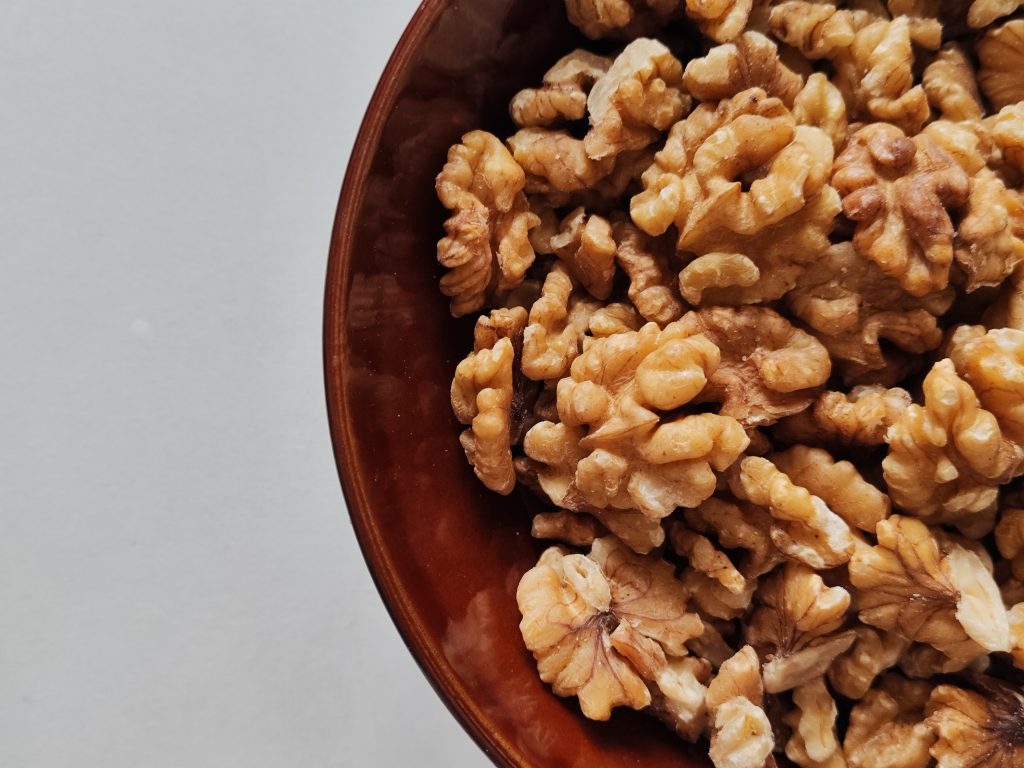
The Walnuts I Walked to the Factory For
These come from Chuxiong, where I spent most of my pregnancy. When I needed more walnuts, I’d walk to a local factory and buy them directly. No middlemen, no contracts—just a mother showing up at the door.

Nutritional Highlights – Grown at Altitude
Grown at over 2,000 meters, Yunnan walnuts develop slowly, concentrating natural oils and nutrients. Typical nutritional profile per 100g:
- Total fat: 60–68g (mainly unsaturated)
- Protein: 14–18g
- Omega-3 (ALA): 6–9g
- Vitamin E: 20–30mg
- Naturally occurring melatonin and serotonin¹
The high altitude and pure environment mean no heavy pesticides – just clean, nutrient-dense kernels.
¹Detailed research available on our blog.
Grades We Offer
- First-grade (头路) – Premium whole kernels, for retail and gifts
- Second-grade (二路) – Everyday snacking, home cooking
- Third-grade (三路) – Processing, further use
- Fourth-grade (四路) – Baking, industrial
- Walnut pieces (核桃碎) – What bakers ask for: uniform, consistent, same mountain sweetness at a practical price

I’ve tried walnuts from across Yunnan, but Chuxiong’s are my favorite. Grown at 1,800m on trees up to 100+ years old — no chemicals, just mountain-raised. The kernels are thick, sweet, and full of flavor.

Our partner is a provincial-level key enterprise with its own walnut orchards, organic processing, and modern dehulling equipment. We guarantee stable supply and large volume.
Bottom line: I ate these every day while breastfeeding my daughter. If they’re good enough for her, they’re good enough for your customers.
The Mushrooms That Went Into My Soups

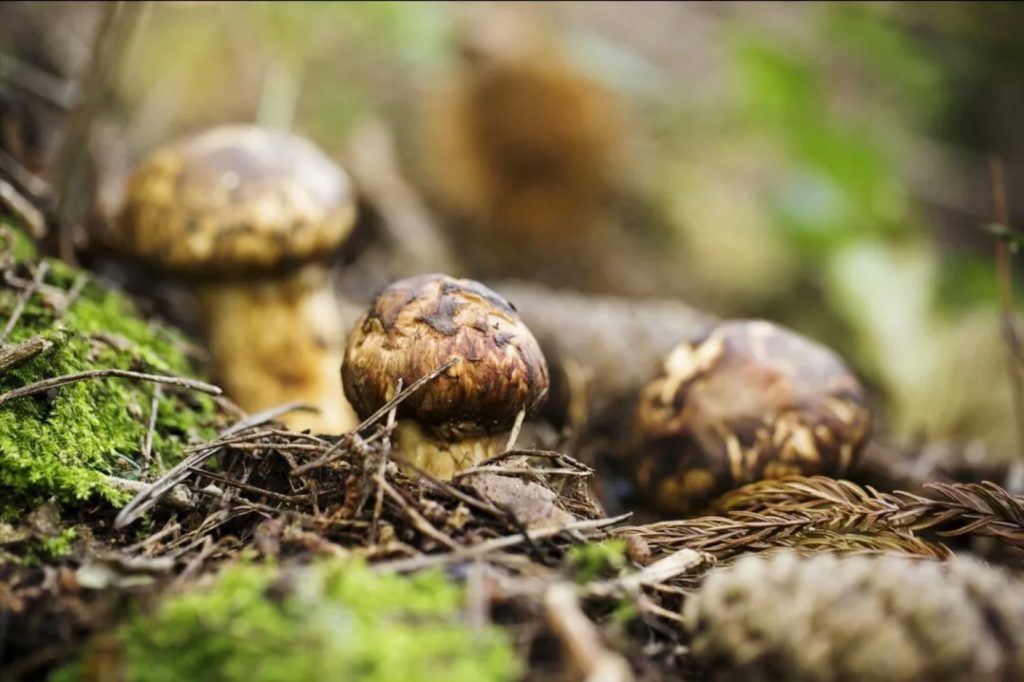
During my pregnancy, wild mushrooms were in my soups week after week. They came straight from the mountains in Chuxiong, still carrying the soil of the forest, bringing both exquisite flavor and rich nutrition to my table.
About the price and why it’s worth it.
Yes,wild matsutake is expensive. A small handful can cost over a hundred yuan. But it’s wild—no one plants it, no one waters it.One bite, and you understand why.
The unique aroma comes from matsutake alcohol (1-octen-3-ol), a compound that cannot be synthesized artificially. Nutritionally, it is rich in polysaccharides, 18 amino acids, and 14 trace minerals.
Matsutake spores must land near the roots of pine or oak trees that are at least 50 years old to form a symbiotic mycorrhizal relationship. From spore to mature mushroom, the process takes 5–6 years. Wild matsutake has never been successfully cultivated artificially.It grows where it wants, and someone has to go find it.
Fresh, it’s a delicacy. Dried, it concentrates that flavor even more. I ate both during my pregnancy. I still do.
Matsutake – Nutritional Profile
- 16 types of amino acids – including 8 essential ones; higher total amino acid content than shiitake, oyster, or enoki mushrooms
- Natural polysaccharides (β-glucans) – recognized immune-supporting compounds
- Rich in minerals – potassium, phosphorus, magnesium, iron, zinc, selenium
- Natural antioxidants – vitamin E, polyphenols, and melatonin
- Matsutake alcohol – the unique, irreplaceable pine-like aroma

What I can get:
- Fresh Wild Matsutake (鲜松茸) – Season: July–October. Fragrant, firm, worth it.
- Dried Wild Matsutake (干松茸) – Available year-round. Soak, cook, and you’re halfway to a memorable dish.
- Wild Porcini (牛肝菌) – Meaty, versatile. Dried or fresh, depending on season.
- Other wild varieties – Ask me. If it grows here, I can find it.
Size grades available for whole matsutake
We offer whole matsutake in different length grades to suit various market needs:
- S (3-5 cm) – Ideal for retail packs
- M (5-7 cm) – Standard grade for restaurants
- L (7-9 cm) – Premium grade for high-end gifts
- XL (9+ cm) – Rare, for special occasions
The short version: I trusted these mushrooms with my pregnancy. They’re wild, they’re expensive, and they’re worth it.A single mushroom can take half a decade to grow, and it cannot be farmed.
More Products from Yunnan
Through the farmers and factory owners I’ve met across Yunnan—in Chuxiong, Dali, and beyond—I can also source:
- Yunnan olives – Tart, rich in vitamin C and antioxidants. Used in traditional medicine for its anti-inflammatory properties. Available as fresh/dried.
- Yunnan fruit syrups – Made from high-altitude fruits, slowly reduced to preserve natural sweetness and aroma. Yunnan’s high-elevation terrain and clean environment give these syrups exceptional purity and depth. Clean, pure, and versatile – perfect for desserts, beverages, and craft cocktails.
- Burdock root – A fibrous root vegetable known for its detoxifying and prebiotic effects. Often used in teas and broths.
- Tianma (Gastrodia) – A prized Yunnan herb traditionally used to support nervous system health, relieve occasional headaches, and promote restful sleep. Grown in the high mountains without pesticides. Often simmered in soups or steeped as tea.
- Other seasonal fruits and specialties – If it grows in Yunnan, ask me. I’ve probably been where it comes from.


Interested in any of these Yunnan specialties? Please feel free to send us an inquiry.